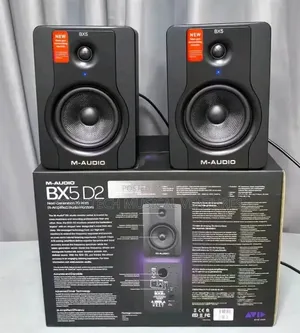
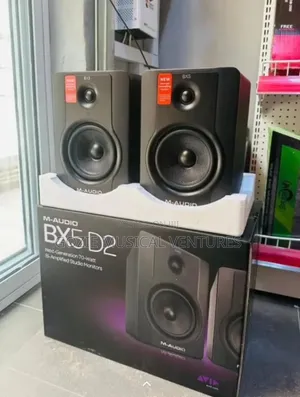
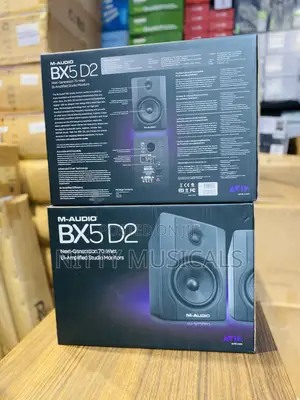
M-Audio BX5 D2/Carbon BX8 D3 Powered Studio Monitors Highlights
Bi-Amplified Design — These monitors typically feature separate amplifiers for the low-frequency (woofer) and high-frequency (tweeter) drivers. This bi-amplified design ensures optimal power delivery to each driver, leading to a more accurate and dynamic sound reproduction.
Front-Firing Port — A front-firing bass port is a common design element that helps to extend the low-frequency response. This placement allows for easier integration into various listening environments and can reduce the impact of boundary effects.
Balanced Inputs — Studio monitors often include balanced input connections like XLR and 1/4" TRS. These connections help to reduce noise and interference, ensuring a clean audio signal when connecting to mixers, audio interfaces, or other studio equipment.
Adjustable Acoustic Controls — Many M-Audio BX series monitors offer adjustable controls for tailoring the sound to your specific room acoustics. These might include high-frequency trim and low-frequency roll-off adjustments to compensate for room reflections or placement.
Near-Field Monitoring — These are designed as near-field monitors, intended for listening at close range. This allows for detailed sound reproduction and critical listening in smaller studio spaces or project studios.
Description
• M-Audio BX5 D2/Carbon and BX8 D3 monitors offer 70W bi-amplified power for clear, high-definition studio sound.
• Feature 5-inch Kevlar low-frequency drivers and silk dome tweeters for accurate bass response and crisp highs.
• Designed for music producers and mix engineers, delivering a flat frequency response for transparent audio monitoring.
• Pinpoint imaging allows for precise placement of instruments in your mix.
• These active reference monitors are ideal for critical listening and detailed audio work.
• Suitable for home studios and professional environments requiring reliable sound reproduction.